
Hindustan Zinc (HZL), a subsidiary of Vedanta, announced an interim dividend of Rs 21 per share last week, resulting in an outflow of Rs 8,863 crore. The announcement has turned the spotlight on India Inc's dividend-paying policy - more so for reasons driving the generosity of firms. An analysis of BSE 500 companies by Business Standard Research Bureau shows that some of the top 20 dividend-paying companies in 2021-22 (FY22) include Vedanta, Tata Consultancy Services, HZL, Oil and Natural Gas Corporation (ONGC), Indian Oil Corporation (IndianOil), Hindustan Unilever (HUL), Reliance Industries (RIL), and Bajaj Auto, among others.

As the Indian currency hovers around its lowest versus the US greenback, several smaller and mid-sized companies are expected to face rough weather as almost 44 per cent of the foreign loans taken by Indian companies remained unhedged. According to the data sourced from the Reserve Bank of India, Indian companies raised around $38.2 billion in the financial year ended in March. Of this, only 56 per cent of the loans are hedged while the rest of the foreign loans remain unhedged, thus risking the companies to forex volatility.

Engineering giant Larsen & Toubro (L&T) handed out a pay cheque of Rs 61.27 crore to its chief executive officer (CEO) and managing director (MD) SN Subrahmanyan in the last financial year (FY22), which is a near 115 per cent hike over FY21, as executive compensation at India Inc comes under sharp focus after two years of Covid-19. In fact, the total compensation of L&T's executive directors (including Subrahmanyan) in FY22 was 120 to 670 times the median remuneration of the company's employees, data from its FY22 annual report shows. This points to sharp hikes that the top management saw in their remuneration during the period, experts in human resources said. In FY21, L&T's executive compensation was 56 to 337 times the median remuneration of company employees.

'The second half of 2022 definitely looks stronger for Bollywood.'

Engineering giant Larsen & Toubro (L&T) is looking to divest its exposure to road and power concessions and incubate digital and e-commerce businesses as part of its new five-year plan ending 2025-26 (FY26). The base year for the plan is 2020-21 (FY21). The blueprint, called Lakshya 2026, is intended to help the company exit sub-scale businesses, concentrate on high-technology (tech) manufacturing, construction and green energy projects, and increase its share from information technology (IT) and digital services. The lending operations of the financial services business, meanwhile, will be reorganised, with focus on retail lending.

Power generating companies (gencos) that use imported coal to produce electricity, may find it difficult to switch on their idle units immediately in the wake of high fuel costs, several players have told Business Standard. Recently, the Union power ministry had invoked Section 11 of the Electricity Act mandating all imported coal-based plants to generate power at full capacity. However, some generating companies that use imported coal, argue that it is simply unviable for them to produce power when the price of coal in the international market is high, while the per-unit price of power has been capped at Rs 12 per unit on the domestic power exchange.

'A good pipeline of movies is fuelling this trend of revenge consumption.'

Even as regulatory focus has zeroed in on foreign e-commerce giant Amazon, a domestic retail giant has been created almost below the radar in Reliance Retail (RR), one of the most crucial businesses for the group's future. From doorstep delivery of groceries, apparels to branded jewellery, medicines, toys, furniture to high street retailing, RR's presence in the world's fourth largest consumer market is just one part of the story.
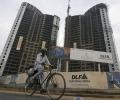
In mid-2020, when Kushal Pal Singh, the undisputed king of India's vast real estate market, relinquished the top post at the country's largest realtor, he left behind an empire that is best compared to the Greek myth of the Phoenix. Once the leader of Delhi's organised real estate market, DLF's steep decline in the 1970s and its majestic rise since has often been cited as a business resurrection story. Now, a year after his departure from the helm of affairs, history seems to be repeating itself at the real estate major. In the 1970s, it was the government prohibitions that had forced DLF to venture into uncharted territory; some five decades later, the Delhi-headquartered firm has set its eyes on another growth trajectory that holds immense potential.

'We will see footfall returning to pre-COVID levels by January.'

In spite of a severe second wave of the coronavirus pandemic, and a widespread disruption in public life therefore, India's fast-moving consumer goods (FMGC) sector seems to have emerged as one of the most resilient segments of the economy. The early numbers and estimates for the April-June quarter indicate a steady recovery in FMCG players' business, which is now set to exceed the pre-pandemic level. Amid nationwide lockdowns because of the first Covid wave, FMCG revenues had been severely affected in mid-2020.

'The spurt in demand for Ayurvedic products has exhausted our production capacity.'

Higher prices are burdening household budgets and threatening the margins of leading manufacturers.

According to the local Brass Handicrafts Manufacturers Association (BHMA), some 800,000 people are directly employed in Moradabad's massive brass handicrafts and utensils manufacturing industry, which has some 30,000 small and micro-scale units and a total annual turnover of Rs 10,000 crore. The manufacturers are heavily dependent on export markets such as the US, Canada, Australia and the European Union. And exports account for nearly 70 per cent of their revenues. According to industry insiders, since this year's lockdowns, manufacturing has been at 65 per cent of normal levels.

The probe agency is learnt to have taken possession of multiple physical and digital records during a search operation conducted on the premises of the South Korean firm in Delhi and Mumbai this week.

As the second wave of the pandemic ebbs and the daily caseload falls, the struggles of the urban poor have come into focus. Many have suffered income and job losses after two successive waves. The second wave, in particular, has seen the poor being hit hard on account of lack of medical and financial help. For the fast-moving consumer goods (FMCG) companies this has meant that an important segment is under severe distress.

Sanjiv Mehta, chairman of the country's largest consumer goods company, HUL, believes that the second wave of the Covid-19 pandemic between April and June this year has been a mere pause in India's consumption story, and that it will not change the country's overall growth trajectory. India is poised for growth, especially in the fast-moving consumer goods (FMCG) sector, Mehta told shareholders at the company's annual general meeting on Tuesday. The signs of recovery are becoming evident with many states lifting lockdown restrictions in recent weeks.

Colgate-Palmolive India is placing greater emphasis on freshness, whitening, therapeutic, and family toothpastes, as rivals such as Dabur and Patanjali dominate the growing naturals segment of the market. Once under 5 per cent of the Rs 10,000-crore domestic toothpaste market, the naturals segment, which includes ayurvedic and herbal variants, is now 25-30 per cent of the market, industry executives said. Growth rates of the naturals segment are estimated to be in the region of 8-9 per cent in volume terms. In value terms, the growth rate for naturals is around 10-12 per cent, sector experts said.

Advertising on television continued to show momentum in May despite the surge in Covid-19 infections and the temporary suspension of the Indian Premier League (IPL), a high-impact television property. The data shared by the Broadcast Audience Research Council of India (BARC) on Thursday shows that advertising volumes in May were up 64 per cent year-on-year. However, there was a marginal dip sequentially, that is, in comparison to April 2021, when advertising had touched a record high owing to the start of the summer season and the return of the IPL to India after being held in the United Arab Emirates in 2020.

'While most companies were bullish before the second wave of double-digit sales growth in FY22, that may not be the case now.'
 © 2026 Rediff.com - Advertise with us - Disclaimer - Privacy Policy - Sitemap - Feedback - About us - Terms of use - Grievances